Google Apps Script · 12 min read
Sync Inventory: Twilio + Google Sheets (Apps Script)
Learn how to sync inventory from Twilio with Google Apps Script. Architecture, code patterns, and when to hire a consultant.
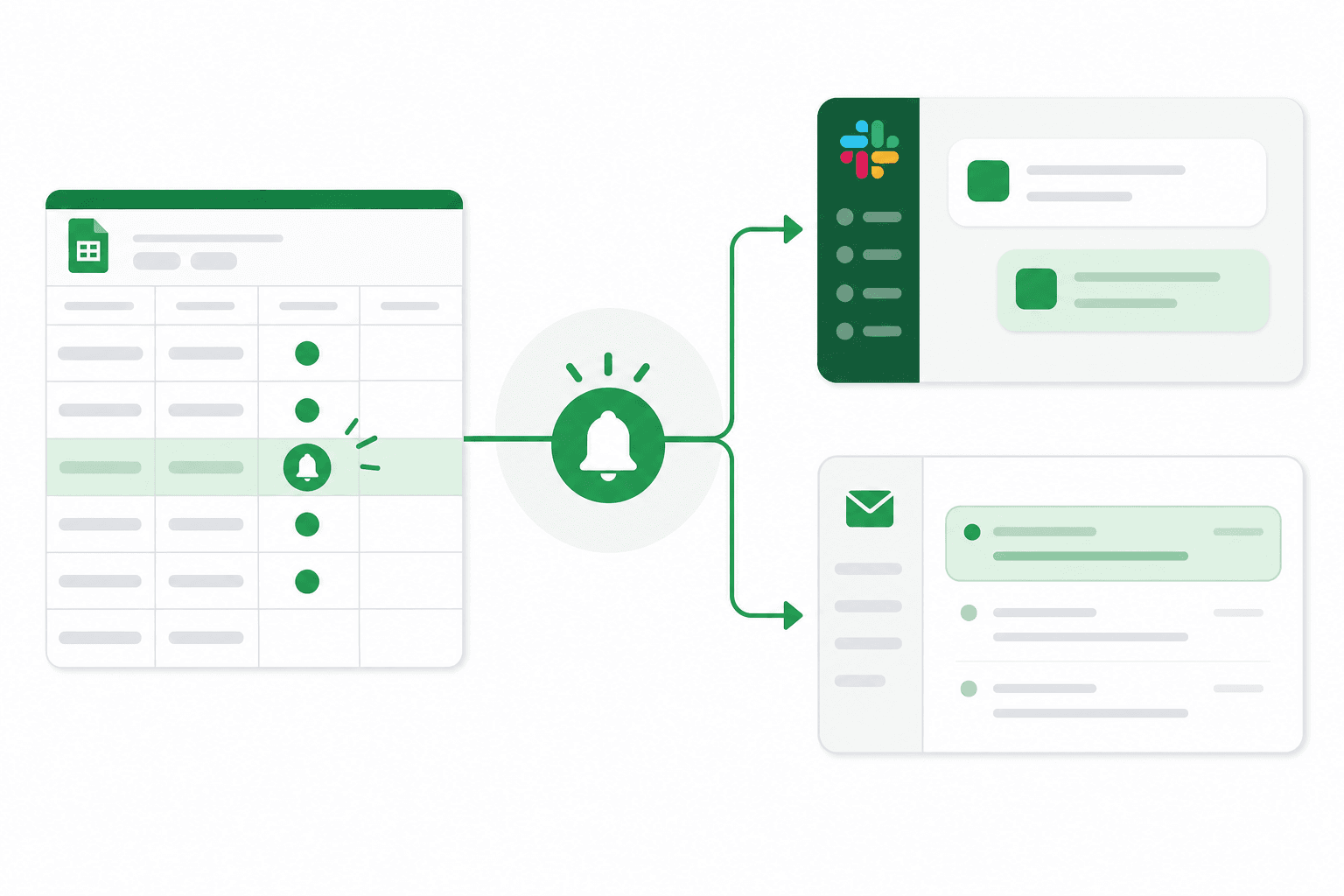
Project deliverable: Twilio automated inside Google Workspace
Hire for API integrations →Teams use Twilio daily but report in Google Sheets. This guide covers how to sync inventory from Twilio with Apps Script—auth, triggers, error handling, and production patterns.
The illustration shows a typical project layout: Twilio data flowing into a structured Sheet, with Gmail or Slack alerts on failure and a Status log for ops visibility.
If you're evaluating Twilio, you're probably spending real hours every week on work that should run in the background. Manual exports, duplicate data entry, and "someone forgot to update the sheet" are not operational quirks—they're measurable drag on revenue and morale.
This guide is written for ops leaders, finance teams, and founders who live in Google Workspace. Whether you build in-house or hire help, you'll leave with a clear architecture, realistic timelines, and an honest comparison of Apps Script versus Zapier, Make, and off-the-shelf SaaS.
Most teams I work with recover 10–20 hours per week within the first month after go-live. The illustration above shows a typical deliverable: structured Sheets as the control plane, API sync in Apps Script, and Gmail or Slack alerts when something needs a human.
Skim the table of contents if you're in a hurry—but the implementation section, code pattern, and checklist are what your technical lead will need before writing a single line of script.
Before vs. after automation
| Before automation | After Apps Script |
|---|---|
| 45+ min/day manual exports | Sync runs every 30–60 min automatically |
| Typos in copy-pasted data | Single source of truth in Sheets |
| Missed alerts until too late | Gmail/Slack alerts on threshold breach |
| $200+/mo on connector tools | $0 recurring platform fees |
| Tribal knowledge in one person's inbox | Documented runbook + shared Sheet |
The problem
Manual exports from Twilio waste hours weekly and introduce typos. Native connectors may not exist or charge per seat.
Apps Script lets you sync inventory from Twilio on your schedule with logic you control—branching, deduplication, and custom field mapping.
Architecture overview
Store API credentials in Script Properties. Use a Config sheet for field mappings and a Status sheet for last sync time, row counts, and errors.
Use time-driven triggers for batch sync; chunk large datasets to stay under the 6-minute execution limit.
What you get when I build this
Working script with documented triggers and permissions.
Mapping sheet template and error notification emails.
Handoff walkthrough and optional maintenance at $50/hr.
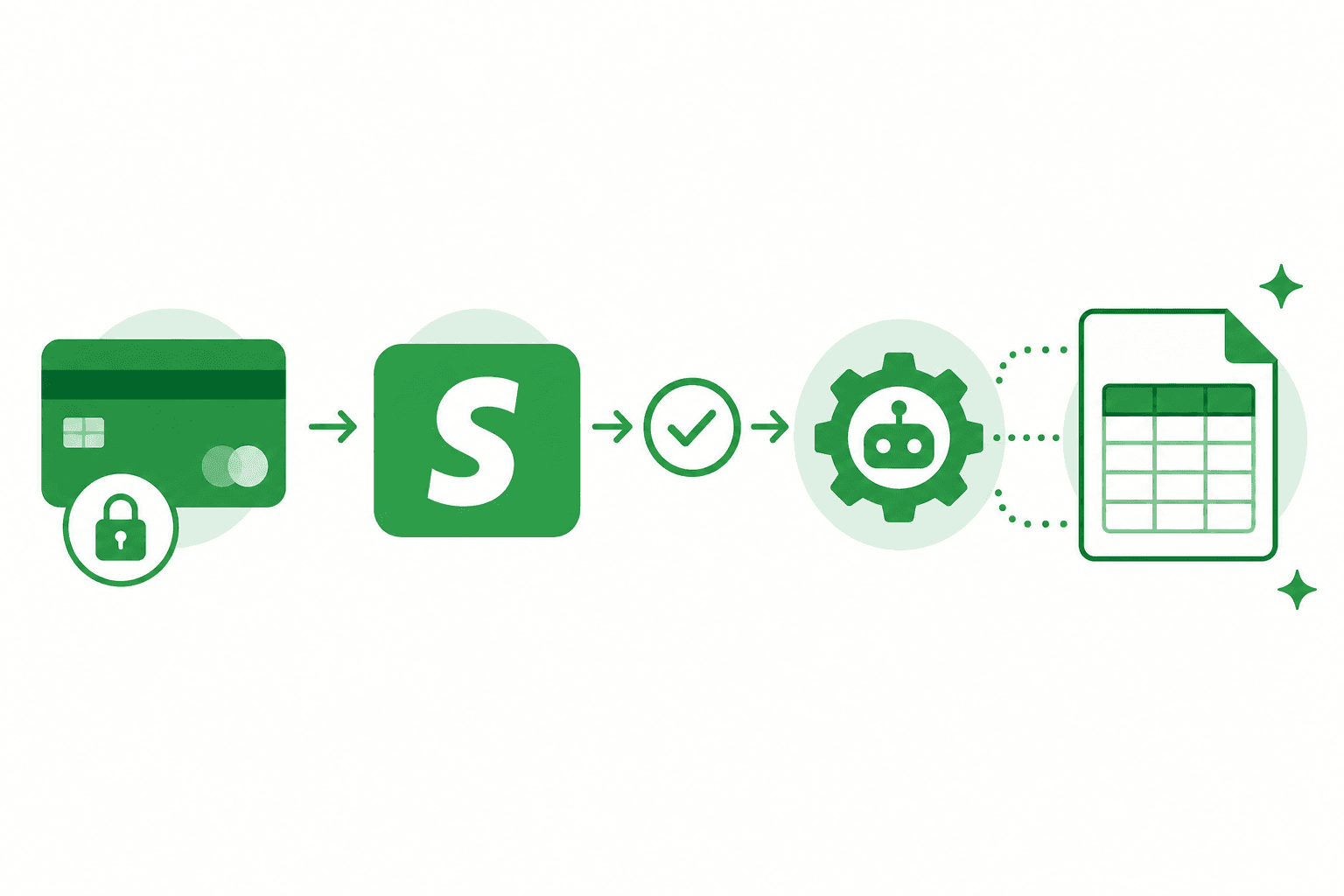
Status sheet + alerts: how ops knows the automation is healthy
Free automation checklist →Twilio in your stack
Twilio is a communication tool—meaning your team likely already exports CSVs or pays for a middleware connector. Apps Script replaces both with code you control.
The Twilio API supports the patterns below. Rate limits vary by plan; we design batch sizes accordingly and never assume unlimited UrlFetch calls.
When Twilio changes API versions, you update one script—not twenty Zap steps scattered across accounts.
Deep dive: Sync Inventory
To sync inventory from Twilio, you need authenticated UrlFetchApp calls, a clear mapping from API JSON to Sheet columns, and a trigger strategy matched to how fresh the data must be.
For scheduled workloads, expect 12–24 hours of build time for a reliable v1, plus UAT time with your real data shapes (refunds, partial shipments, multi-currency, etc.).
The before/after table below reflects what Twilio clients typically report after the first month of production use.
Who this guide is for
This page is for operations and IT leads who already use Google Sheets or Gmail daily and need Twilio to work without copy-paste.
You do not need to be a developer to read this. Technical sections are labeled so you can forward them to whoever builds—or book a discovery call and I'll scope it for you.
- Ops managers tired of daily CSV rituals
- Finance leads who need auditable, formula-driven reporting
- Founders avoiding $15k/year CRM seat fees
- IT admins who need domain-controlled permissions
Cost, ROI, and when DIY makes sense
Apps Script itself is free inside Google Workspace. Your costs are build time (yours or a consultant's) and any third-party API fees. Compare that to Zapier at hundreds per month forever, or Salesforce seats at $25–$150 per user.
Rule of thumb: if the workflow runs more than 50 times per month, touches custom business rules, or must live in Sheets for compliance, Apps Script wins on total cost of ownership within 6–12 months.
DIY works when you have a technical team member with 20+ hours to spare and tolerance for debugging quotas and OAuth. Hire when the workflow is revenue-critical, deadline-bound, or needs production error handling on day one.
Typical ROI: 10–20 hrs/week reclaimed · $0 recurring automation tax
Get a fixed-price quote →Production architecture (what actually ships)
Every production script I deliver follows the same skeleton: Config sheet for mappings, Data sheet(s) for humans, Status sheet for machines, Script Properties for secrets, and LockService when concurrent runs are possible.
Triggers are installable—not simple onEdit—whenever external APIs are involved. Simple triggers cannot call UrlFetchApp. Time-driven triggers batch work; webhooks via doPost handle real-time events when the platform supports them.
Error handling is not optional. Failed rows land in a Dead Letter tab with timestamp and raw payload. Managers get one digest email per day, not fifty alerts per failure.
Want this architecture built for you?
Free 30-min discovery call · Fixed-price quote within 24 hours · You own the code
Book discovery callBuild it yourself vs. hire a consultant
Google's documentation is solid for hello-world scripts. Production is different: idempotent upserts, rate-limit backoff, timezone-safe date parsing, and permission models that survive employee turnover.
I charge $50/hr with fixed-price quotes after discovery. Most projects go live in 1–3 weeks. You own the code, the triggers, and the documentation—no vendor lock-in.
If you've already tried and hit trigger not firing, execution timeout, or quota errors, see our troubleshooting guides linked below. Those issues are architectural, not mysteries.
Not sure if DIY is worth it?
Take the free automation audit—get a prioritized list of what to automate first.
Take the free auditSecurity, permissions, and data residency
Scripts run as the user who authorized them (or as domain-wide service accounts for advanced setups). Apply least-privilege OAuth scopes—request only what the workflow needs.
Secrets belong in Script Properties or Google Cloud Secret Manager, never in cells or comments. For web apps, use domain lock so only your organization can execute doGet.
Data stays in your Google account. For regulated industries, Sheets access controls plus audit logging in the Status sheet often satisfy internal compliance without a new vendor risk assessment.
Step-by-step implementation walkthrough
Phase 1 — Discovery (30 min, free): map inputs, outputs, edge cases, and who approves go-live. Phase 2 — Schema: design Sheet tabs and API field mapping before writing code.
Phase 3 — Sandbox build: run against test data with artificial delays and forced failures to verify alerts. Phase 4 — Production cutover: parallel run for one week if possible, then disable manual process.
Phase 5 — Handoff: recorded walkthrough, runbook doc, and optional retainer for API changes. Most clients schedule a 30-day check-in to tune batch sizes after seeing real volume.
Common mistakes (and how to avoid them)
Mistake #1: storing API keys in column A. Rotate keys without redeploying by using Script Properties. Mistake #2: polling every minute until UrlFetch quota dies. Poll hourly with webhooks for urgent events.
Mistake #3: no Status sheet—when something breaks, nobody knows until month-end close. Mistake #4: building in a personal Gmail account then migrating to Workspace (quotas differ—test on production account type).
Mistake #5: skipping LockService on edit triggers. Two simultaneous edits can duplicate external API calls and create duplicate CRM records.
Apps Script vs. alternatives
Neutral comparison for Google Workspace teams
| Approach | Monthly cost | Ownership | Best for |
|---|---|---|---|
| Google Apps Script | $0 platform + build | You own code | Workspace-native teams |
| Zapier | $20–600+/mo | Vendor logic | Quick no-code wins |
| Make (Integromat) | $9–299+/mo | Vendor scenarios | Visual multi-app flows |
| Hire consultant ($50/hr) | One-time build | You own code | Custom logic & compliance |
Example: production sync pattern for Twilio
This skeleton includes locking, batch writes, Status logging, and failure email—patterns every client project uses. Replace API_URL and parsing logic for your endpoint.
/**
 * Twilio — production pattern (simplified)
 * Store secrets in Script Properties, never in cells.
 */
function syncData() {
  const lock = LockService.getScriptLock();
  if (!lock.tryLock(10000)) return;
  try {
    const ss = SpreadsheetApp.getActiveSpreadsheet();
    const status = ss.getSheetByName('Status') || ss.insertSheet('Status');
    const props = PropertiesService.getScriptProperties();
    const cursor = props.getProperty('lastSync') || '0';

    const response = UrlFetchApp.fetch(API_URL, {
      muteHttpExceptions: true,
      headers: { Authorization: 'Bearer ' + props.getProperty('API_TOKEN') },
    });

    if (response.getResponseCode() !== 200) {
      status.appendRow([new Date(), 'ERROR', response.getContentText()]);
      MailApp.sendEmail(Session.getActiveUser().getEmail(), 'Sync failed', response.getContentText());
      return;
    }

    const rows = JSON.parse(response.getContentText()).data;
    const sheet = ss.getSheetByName('Data');
    // Batch write — never setValue in a loop over 10k rows
    if (rows.length) sheet.getRange(sheet.getLastRow() + 1, 1, rows.length, rows[0].length).setValues(rows);
    props.setProperty('lastSync', String(Date.now()));
    status.appendRow([new Date(), 'OK', rows.length + ' rows']);
  } finally {
    lock.releaseLock();
  }
}
Need this wired to your APIs? Hire a Google Apps Script developer or grab snippets from the free script library.
Pre-build checklist: Twilio
- 1List every data source (Sheets tabs, API endpoints, Gmail labels) and who owns each
- 2Define success metrics: hours saved per week, error rate, sync latency target
- 3Identify edge cases: refunds, cancelled orders, duplicate emails, timezone boundaries
- 4Confirm Google account type (consumer vs Workspace) for quota planning
- 5Document who receives failure alerts and expected response time
- 6Agree on a test window with sanitized sample data before production cutover
- 7Schedule 30-min handoff walkthrough for ops and backup contact
Real project outcome
Shopify → Sheets ops hub
A mid-size retailer replaced 45 min/day of CSV exports with live sync, dashboards, and low-stock Gmail alerts. Ops stopped manual data entry; stockouts dropped sharply.
45 min/day → ~0 manual export time
Read full case study →How I build this for clients
- 01
Discovery
Map data sources, triggers, and success metrics in a 30-min call.
- 02
Architecture
Design Sheets schema, API auth, error logging, and quota-safe batching.
- 03
Build & test
Develop in your sandbox with edge-case testing on real data samples.
- 04
Deploy
Install triggers, set permissions, document the runbook, train your team.
Pricing & timeline
$50/hr — fixed-price quotes within 24 hours after a free discovery call. Typical builds: 8–40 hours (1–3 weeks calendar time). You own the code; no recurring Zapier or connector fees. Get a quote · Free checklist
Frequently asked questions
Continue exploring
More Twilio integrations
- Gmail Notifications — Twilio
send Gmail alerts from Twilio with Apps Script
- Webhook Automation — Twilio
automate webhooks with Twilio with Apps Script
- Sync Customers — Twilio
sync customers from Twilio with Apps Script
- Payment Reconciliation — Twilio
reconcile payments from Twilio with Apps Script
- Reporting Dashboard — Twilio
build reporting dashboards from Twilio with Apps Script